Spinach. It's one of the most healthy foods you can find--filled with loads of vitamins (especially A & C) and extremely high in antioxidants. It's also considered to be high in folic acit, iron and calcium among many other nutrients.
But to some, spinach is just an ugly blob of goo sitting on their plate. It doesn't have to be that way.
Spinach does not have to be cooked very much (many like to eat it raw) and it only takes minutes to prepare by sauteeing, steaming, wilting, etc--making it a great weeknight side dish.
Mark Bittman of the New York Times has come up with tasty and easy ways of putting more of this great veggie on your dinner plate.
While there are many ways of cooking spinach, Bittman uses wilting, steaming, braising and super-slow cooking to create 12 distinct, but simple dishes. Read about them here.
Fresh spinach should be appearing soon in your local farmers' market (if it hasn't already), so pick up a bunch or two and try these recipes--or your own favorite!
Personal Chef Rich Baringer waxing poetic about food, eating, cooking and lots of other stuff.
Want to find more information about Dinner's Done Personal Chef Service?
Call: 215-804-6438
Email: DinnersDonePA@comcast.net
Visit: www.DinnersDonePA.com
Sign up for my monthly e-newsletter: Click Here
COMMENTS ARE ALWAYS WELCOME! LET ME KNOW WHAT YOU THINK!
Call: 215-804-6438
Email: DinnersDonePA@comcast.net
Visit: www.DinnersDonePA.com
Sign up for my monthly e-newsletter: Click Here
COMMENTS ARE ALWAYS WELCOME! LET ME KNOW WHAT YOU THINK!
Showing posts with label Mark Bittman. Show all posts
Monday, May 7, 2012
Wednesday, February 1, 2012
Root, Root, Root for the Home Team
We all know that eating locally is great--especially in our area with all the great farms and farm markets around. It gives us fresher, more nutritious, more delicious produce than we could ever find in a supermarket.
But we also know that in the dead of winter (yes, this is winter despite the spring-like weather), it's hard to eat locally grown produce. No tomatoes or cucumbers around here these days. So if we can't necessarily eat locally, we can eat seasonally. And this time of year, that often means root vegetables.
Supermarket tomatoes, for example, grown in California or Mexico or wherever, taste lousy because tomatoes just don't ship well. But root veggies, whether they're grown locally or not, will not lose their freshness for a long time.
Carrots, parsnips, beets, celeriac and other root veggies may not have gained popularity until recently (and for some, haven't gotten that far yet). But don't dismiss them--especially roasted where they get browned and so sweet.
The cool thing about them, as NY Times food columnist, Mark Bittman, writes, is that root veggies can be used virtually interchangeably. You may have to adjust cooking times, but you can use parsnips in a recipe that calls for carrots or turnips in place of potatoes, etc. Check out Bittman's article about root veggies and be sure to click the link that takes you his recipes.
But we also know that in the dead of winter (yes, this is winter despite the spring-like weather), it's hard to eat locally grown produce. No tomatoes or cucumbers around here these days. So if we can't necessarily eat locally, we can eat seasonally. And this time of year, that often means root vegetables.
Supermarket tomatoes, for example, grown in California or Mexico or wherever, taste lousy because tomatoes just don't ship well. But root veggies, whether they're grown locally or not, will not lose their freshness for a long time.
Carrots, parsnips, beets, celeriac and other root veggies may not have gained popularity until recently (and for some, haven't gotten that far yet). But don't dismiss them--especially roasted where they get browned and so sweet.
The cool thing about them, as NY Times food columnist, Mark Bittman, writes, is that root veggies can be used virtually interchangeably. You may have to adjust cooking times, but you can use parsnips in a recipe that calls for carrots or turnips in place of potatoes, etc. Check out Bittman's article about root veggies and be sure to click the link that takes you his recipes.
Wednesday, December 14, 2011
Finger Food Help
This time of year, most of us are trying to find quick and easy foods for entertaining--whether it's for a party or for when people unexpectedly drop in.
Yes, having cheese and crackers on hand is helpful. But doing just a little bit more can make a great impression--and create some tasty treats.
The New York Times' Mark Bittman always seems to come up with some great templates for how to make delicious food (see some of the other items I've posted in the past using his articles).
This time, Bittman lays out a flow chart for creating great finger food with little prep time. Most of the ingredients he uses might just be in your pantry or fridge when you need them.
He divides good finger food into 3 parts: The Base--crackers, celery, etc that will hold other ingredients; The Spread--something to spread on The Base that will be flavorful and hold The Finishing Touch--something with flavor and texture.
Check out his chart here. Then just wait for guests to show up!
Yes, having cheese and crackers on hand is helpful. But doing just a little bit more can make a great impression--and create some tasty treats.
The New York Times' Mark Bittman always seems to come up with some great templates for how to make delicious food (see some of the other items I've posted in the past using his articles).
This time, Bittman lays out a flow chart for creating great finger food with little prep time. Most of the ingredients he uses might just be in your pantry or fridge when you need them.
He divides good finger food into 3 parts: The Base--crackers, celery, etc that will hold other ingredients; The Spread--something to spread on The Base that will be flavorful and hold The Finishing Touch--something with flavor and texture.
Check out his chart here. Then just wait for guests to show up!
Labels:
entertaining,
finger food,
Mark Bittman,
New York Times
Monday, July 18, 2011
Where's the Beef?
In a recent New York Times article, Mark Bittman wrote:
If you read my last post, you would have gotten a great recipe for a grilled veggie salad. Marinated veggies with those yummy black char marks. Mmmm...
Although people don't think of doing it very often, grilling fruit can be a wonderful way of bringing out the subtle flavors of fruits like peaches, bananas, pineapple, melons and more. This weekend I made a Grilled Pineapple-Banana Fool (a parfait-type dessert layering the grilled fruit tossed with a little honey and sweetened whipped cream).
Grilled fruits aren't just for desserts, though. Sprinkle pineapple slices with salt, pepper and something spicy (like cayenne) and grill them to use as a side dish for grilled fish or pork. The possibilities are as endless as your creativity!
Read more about grilling meaty veggies in Bittman's article. Then get the grill fired up!
The grill, as everyone knows, is the best place to cook a steak, but that doesn’t mean you have to cook a steak every time you fire up the grill.Very true. I mean, a really good grilled steak is hard to beat. But you can do so much more on a grill than just meat and poultry. All kinds of veggies are great when mixed with the smoky goodness that comes from grilling.
If you read my last post, you would have gotten a great recipe for a grilled veggie salad. Marinated veggies with those yummy black char marks. Mmmm...
Although people don't think of doing it very often, grilling fruit can be a wonderful way of bringing out the subtle flavors of fruits like peaches, bananas, pineapple, melons and more. This weekend I made a Grilled Pineapple-Banana Fool (a parfait-type dessert layering the grilled fruit tossed with a little honey and sweetened whipped cream). Grilled fruits aren't just for desserts, though. Sprinkle pineapple slices with salt, pepper and something spicy (like cayenne) and grill them to use as a side dish for grilled fish or pork. The possibilities are as endless as your creativity!
Read more about grilling meaty veggies in Bittman's article. Then get the grill fired up!
Labels:
fruit,
grilling,
Mark Bittman,
New York Times,
vegetables
Tuesday, April 5, 2011
More Fish
So I've written about the health benefits of seafood. And I've given you some tips about choosing the best seafood. So now I'll finish up this seafood theme with some easy and delicious recipes that you can make. Seafood is not hard to cook--and it's incredibly quick to make. You only have to be a bit attentive so you don't overcook.
First, I go back to Mark Bittman, food guru and New York Times food writer. You may remember a post that I wrote using his universal vegetable soup recipes. In the same way, Bittman has simplified the cooking of white fish (cod, catfish, halibut, flounder, etc, etc). He groups his recipes in 4 categories: broiled, sauteed, roasted and poached. He creates the recipes so the ingredients--including the type of fish and the seasonings--are interchangeable. Click here for the article.
Since Bittman tackled white fish, I'll give you 2 recipes for some other kinds of seafood.
PAN-SEARED SCALLOPS (serves 4) from America's Test Kitchen
Sea scallops can vary dramatically in size. A dinner portion, therefore, can range from 4-6 scallops per person. To ensure that the scallops cook at the same rate, be sure to buy scallops of similar size. Note that scallops have a small, rough-textured, crescent-shaped muscle that toughens once cooked. It's easy to remove--simply peel it from the side of each scallop before cooking.
INGREDIENTS
1 1/2 pound large sea scallops (16-24), tendons removed (see note above)
Table salt and ground black pepper
1/4 cup vegetable oil
PAN-SEARED SESAME-CRUSTED TUNA STEAKS (serves 4) from America's Test Kitchen
Prepare the sauce before cooking the fish (recipe follows). Cooking times in this recipe are for tuna steaks cooked to rare and medium-rare. If you prefer medium, observe the timing for medium-rare, then tent the tuna loosely with foil for 5 minutes before slicing. If you prefer tuna cooked so rare that it is still cold in the center, try to purchase steaks that are 1 1/2" thick and cook them according to the timing for rare. Bear in mind that the cooking times are estimates; check for doneness by nicking the fish with a paring knife. to cook only 2 steaks, use half as many sesame seeds, reduce the amount of oil to 2 teaspoons both on the fish and in the pan, use a 10" nonstick skillet and follow the same cooking times.
INGREDIENTS
3/4 cup sesame seeds
4 (8 ounce) tuna steak, about 1" thick (see note above)
2 tablespoons vegetable oil
Table salt and ground black pepper
1 recipe Ginger-Soy Sauce with Scallions (see recipe below)
GINGER-SOY SAUCE WITH SCALLIONS (makes about 1 cup)
INGREDIENTS
1/4 cup soy sauce
1/4 cup rice vinegar
1/4 cup water
1 medium scallion, sliced thin
2 1/2 teaspoons sugar
2 teaspoons minced or grated fresh ginger
1 1/2 teaspoons toasted sesame oil
1/2 teaspoon red pepper flakes
![]() |
| Mark Bittman's Broiled Fish Recipes courtesty of The New York Times |
Since Bittman tackled white fish, I'll give you 2 recipes for some other kinds of seafood.
PAN-SEARED SCALLOPS (serves 4) from America's Test Kitchen
Sea scallops can vary dramatically in size. A dinner portion, therefore, can range from 4-6 scallops per person. To ensure that the scallops cook at the same rate, be sure to buy scallops of similar size. Note that scallops have a small, rough-textured, crescent-shaped muscle that toughens once cooked. It's easy to remove--simply peel it from the side of each scallop before cooking.
INGREDIENTS
![]() |
| Photo courtesty of America's Test Kitchen |
Table salt and ground black pepper
1/4 cup vegetable oil
- Place the scallops on a dish towel-lined plate or baking sheet and season with salt and pepper. Lay a single layer of paper towels over the scallops; set aside.
- Add 2 tablespoons of the oil to a 12" skillet and heat over high heat until just smoking. Meanwhile, press the paper towel flush to the scallops to dry. Add half of the scallops to the skillet, dry side facing down, and cook until evenly golden, 1-2 minutes. Using tongs, transfer the scallops, browned side facing up, to a large plate; set aside. Wipe out the skillet using a wad of paper towels. Repeat with the remaining 2 tablespoons of oil and the remaining scallops. Once the first side is golden, turn the heat to medium, turn the scallops over with tongs, and return the first batch of scallops to the pan, golden side facing up. Cook until the sides of all the scallops have firmed up and all but the middle third of each scallop is opaque, 30-60 seconds longer. Serve with your choice of sauce of vinaigrette.
PAN-SEARED SESAME-CRUSTED TUNA STEAKS (serves 4) from America's Test Kitchen
Prepare the sauce before cooking the fish (recipe follows). Cooking times in this recipe are for tuna steaks cooked to rare and medium-rare. If you prefer medium, observe the timing for medium-rare, then tent the tuna loosely with foil for 5 minutes before slicing. If you prefer tuna cooked so rare that it is still cold in the center, try to purchase steaks that are 1 1/2" thick and cook them according to the timing for rare. Bear in mind that the cooking times are estimates; check for doneness by nicking the fish with a paring knife. to cook only 2 steaks, use half as many sesame seeds, reduce the amount of oil to 2 teaspoons both on the fish and in the pan, use a 10" nonstick skillet and follow the same cooking times.
INGREDIENTS
3/4 cup sesame seeds
4 (8 ounce) tuna steak, about 1" thick (see note above)
2 tablespoons vegetable oil
Table salt and ground black pepper
1 recipe Ginger-Soy Sauce with Scallions (see recipe below)
- Spread the seeds in a shallow baking dish or pie plate. Pat the tuna steaks dry with a paper towel; use 1 tablespoon of the oil to rub both sides of the steaks, then sprinkle them with salt and pepper. Press both sides of each steak in the sesame seeds to coat.
- Heat the remaining 1 tablespoon of oil in a 12" nonstick skillet over high heat until just beginning to smoke and swirl to coat the pan. Add the steaks and cook 30 seconds without moving them. Reduce the heat to medium-high and continue to cook until the seeds are golden brown, about 1 1/2 minutes. Using tongs, flip the tuna carefully and cook, without moving them, until golden brown on the second side and the centers register 110 degrees for rare (about 1 1/2 minutes) or 120 degrees for medium-rare (about 3 minutes). Serve with sauce.
GINGER-SOY SAUCE WITH SCALLIONS (makes about 1 cup)
INGREDIENTS
1/4 cup soy sauce
1/4 cup rice vinegar
1/4 cup water
1 medium scallion, sliced thin
2 1/2 teaspoons sugar
2 teaspoons minced or grated fresh ginger
1 1/2 teaspoons toasted sesame oil
1/2 teaspoon red pepper flakes
- Combine all the ingredients in a small bowl, stirring to dissolve sugar.
Friday, March 25, 2011
Soup it Up
There are some foods that are often easier to throw together than to follow a recipe to make. We always have some sort of pizza crust on hand for when we want a very quick meal--throw whatever you have in the fridge on the crust, stick it in the oven and 9 minutes later, you have pizza. OK, it's a little more involved than that, but not much.
Another food that can be done at the last minute is soup. The problem is that there's a little more to a good soup than to throw stuff in some water and boil. You have to have some guidance. Once you have that guidance, things are very easy.
His 4 groups of veggie soups are: Creamy--pureed with some sort of dairy; Brothy--veg broth with quick-cooking ingredients added; Earthy--with beans added; and Hearty--veggies sauteed first to give a deeper flavor.
He gives 3 examples of each type of soup and you'll see how easy it is to use the same technicques for each kind and just switch the ingredients to create a completely new soup. He promises that after working through these soups, you'll never need a veggie soup recipe again.
So get going! Soup it up!
Another food that can be done at the last minute is soup. The problem is that there's a little more to a good soup than to throw stuff in some water and boil. You have to have some guidance. Once you have that guidance, things are very easy.
So thank you to food guru Mark Bittman for giving us this guidance in an article in The New York Times. In it, spells out how to make 4 different kinds of vegetable soup with little special preparation, little time and using ingredients that most will have on hand.
![]() |
| Mark Bittmans' Creamy Soups (courtesy nytimes.com) |
He gives 3 examples of each type of soup and you'll see how easy it is to use the same technicques for each kind and just switch the ingredients to create a completely new soup. He promises that after working through these soups, you'll never need a veggie soup recipe again.
So get going! Soup it up!
Monday, January 10, 2011
Pig Out on Dessert
The holidays are over, but how much of your holiday sweets are still sitting around? Cookies, candy and more will be tempting us over the next few weeks, at least.
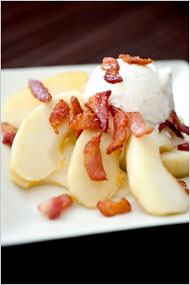
All you need is four ingredients: apples, sugar, ice cream and bacon. Yeah, I'm writing about bacon again. As Bittman writes, those of you who have either intentionally or mistakenly eaten bacon and maple syrup know, the smoke and salt of bacon goes great with sweet. (It's one of my favorite combos--as I wrote in my post, "Make Me a Match" from October.
Bittman says to cook the bacon and then add sugar to give a crunchy, caramelization to the meat. Cook the apple in the bacon fat with some more sugar and then serve with ice cream. As he says, "I don't see this as a trend, but it's pretty great as a one-shot deal." Read his article for more details on how to make this. I'm going to have to try it soon.
![]() |
| Photo by Evan Sung for The New York Times |
After eating all of those kinds of things, though, you get to a point where you yearn for something a little different. Well, famed chef and food writer, Mark Bittman, offers a suggestion in the New York Times for a dessert that fits the bill.
All you need is four ingredients: apples, sugar, ice cream and bacon. Yeah, I'm writing about bacon again. As Bittman writes, those of you who have either intentionally or mistakenly eaten bacon and maple syrup know, the smoke and salt of bacon goes great with sweet. (It's one of my favorite combos--as I wrote in my post, "Make Me a Match" from October.
Bittman says to cook the bacon and then add sugar to give a crunchy, caramelization to the meat. Cook the apple in the bacon fat with some more sugar and then serve with ice cream. As he says, "I don't see this as a trend, but it's pretty great as a one-shot deal." Read his article for more details on how to make this. I'm going to have to try it soon.
Subscribe to:
Posts (Atom)