Want to find more information about Dinner's Done Personal Chef Service?
Call: 215-804-6438
Email: DinnersDonePA@comcast.net
Visit: www.DinnersDonePA.com
Sign up for my monthly e-newsletter: Click Here

COMMENTS ARE ALWAYS WELCOME! LET ME KNOW WHAT YOU THINK!

Monday, April 4, 2011

Gone Fishin' (cont.)

Last week I wrote a bit about the great health benefits of eating fish and other seafood (click here if you didn't read it).  A lot of people, however are intimidated by buying fresh fish.  Follow these tips (many of them common sense) and you'll be just fine.

First, you want to find a reputable dealer.  There are a number of good seafood dealers in our area (Bucks County Seafood in Dublin, Heller's Seafood in Warrington, Captain Bob's in Quakertown just to name a few).  When you step foot in any seafood place you want to use your senses.  Ask yourself:  Does it smell fishy in here?  Does it look clean?  If it does smell fishy or look dirty, head to another market.  Choose a dealer that's busy.  High volume = fresher fish.  Ask the clerk about the freshness of the seafood, like when it was caught.  Ask to see the FDA tag for shellfish that shows when the shellfish was harvested and processed.  Fish markets like informed customers and should be willing to tell you these things.  Also, be sure to bring a cooler with ice packs to transport your seafood home.

Fish should be displayed on a thick bed of fresh ice or well refrigerated.  It should never be sitting in water.  The fish should smell fresh, like the sea--not fishy.  Ask to smell the fish if you want to.  Whole fish should have clear eyes, bright red gills and the flesh should be firm and shiny and should bounce back when pressed lightly (ask the merchant to do this for you).  Fillets should be firm, shiny and bounce back like a whole fish.  There should be no signs of drying, discoloration or mushiness.  Frozen fish fillets are sometimes a good alternative to fresh--especially flounder, sole and some thicker cuts like halibut, snapper, tilapia and salmon.  These are OK if you cook them a little more than medium-rare (frozen fillets can be a little stringy otherwise).  Tuna and swordfish aren't great frozen unless they're flash frozen on the boat.  Never buy frozen fish if the packaging is damaged or there are signs of frost or ice crystals.

Clams, oysters and mussels should never be chosen if they have broken or cracked shells--they must be alive.  If they're open, tap them a few times with another one and they should close.  If not, it's probably not alive.

Crabs and lobsters are also sold alive--and they should be acting that way.  They should have lots of leg movement.  Frozen or pasteurized is a good alternative if you don't want to deal with a live animal.

Always ask if scallops are "dry-packed".  This means that they're not soaked in salt water to keep plump.  If they aren't dry-packed, you probably want to pass on them.  You'll be paying for more water and less taste.  If they're sitting in a milky liquid, they aren't dry-packed.

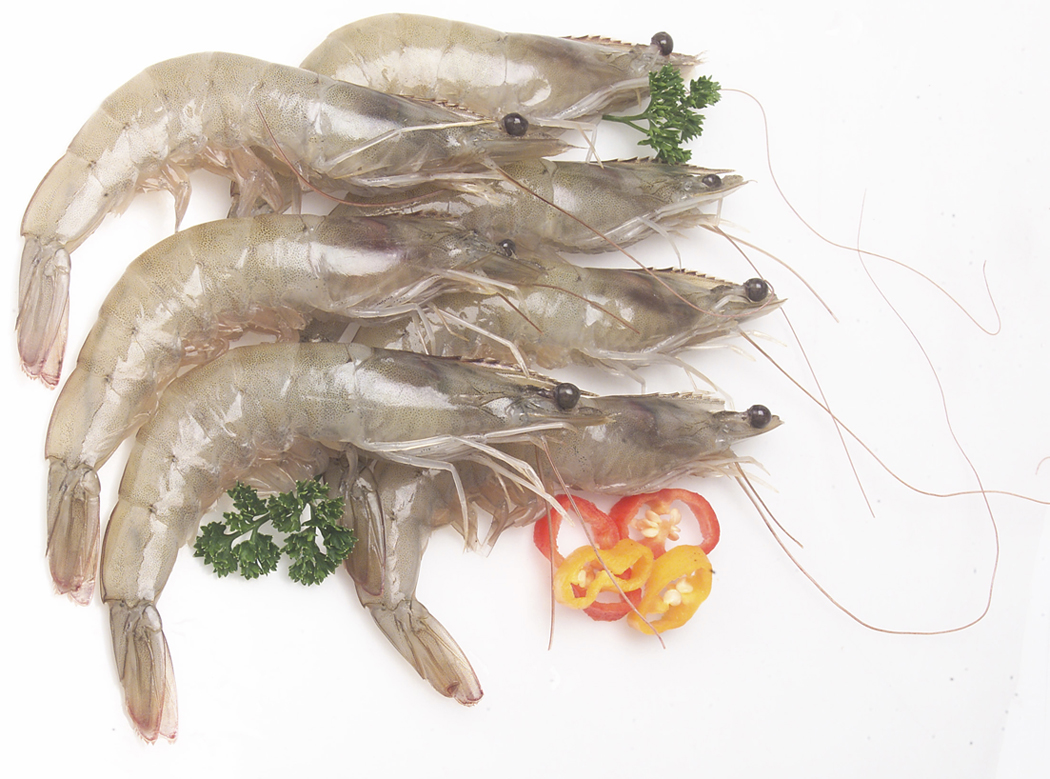
Shrimp, like fish, should be fresh smelling and feel firm.  Unless you live near where shrimp are caught, any shrimp in a fish market will have been frozen already.  So what you think of as fresh shrimp were thawed already--you just don't know when.  So it's actually best to buy frozen shrimp (unless the merchant assures you that they were thawed recently).  You want to buy unpeeled shrimp for better taste and texture.  The ingredient list on a bag of frozen shrimp should be "shrimp" only--no additives or salt.  Wild shrimp are your best bet for taste, although farmed aren't bad.  Shrimp are sized by the number of shrimp per pound--16-20, 24-30, etc.  The higher the number, the smaller the shrimp.

Frozen is your best bet for squid and octopus as well, but if you can get fresh, use the fish rules (fresh smelling, clear eyes, etc).

Fish stored at 32 degrees lasts twice as long as fish stored at 40 (the typical fridge temperature).  When you store fresh fish, put it in a zip-top bag and keep it on ice (or cover with freezer packs) in the back of your fridge and use it within 2-3 days.  If you go beyond that, wrap it tightly in foil and plastic and freeze until you're ready to use it.

Ideally, frozen fish should be thawed in the fridge overnight.  Remove it from the package, put it on a rimmed plate (to catch any water) and cover it with plastic.  If you need to thaw it faster, thaw it in cold running water in the original package.

I hope this gives you a little bit of insight of what to look for when shopping for fresh seafood.  Check back later in the week for some easy recipes that you can make with your newly bought seafood.

Friday, April 1, 2011

Happy Opening Day!

Well, technically, baseball's Opening Day was yesterday.  But it doesn't really mean much around here until the Phillies open.  And that's today at 1:05 (weather permitting--at least it's stopped snowing here). 

Jake is home and we're going to hang together and watch the game.  He's decided that since "Phillies" starts with a "P", we have snacks that start with "P".  So we're having popcorn, pickles, pretzels, potato chips.  He wanted pea, pork and pears, but we don't have any right now (today is shopping day). 

Here's a good Opening Day joke sent by my sister:
A Phillies fan, Mets fan and Yankees fan were at the top of a mountain together.  They were arguing about who was the best fan.  The Yankees fan insisted he was the most loyal and to prove it, he yelled, "This is for the Yankees!" and jumped off the mountain.  Not to be outdone, the Phillies fan yelled, "This is for the Phillies!" and he pushed the Mets fan off the mountain.
And here's Jake's annual Opening Day message:
GO PHILLIES!

Thursday, March 31, 2011

Gone Fishin'

How often do you eat fish?  I was surprised to read that according to a 2008 report, 45% of Americans say they eat fish once a week (I would imagine that includes eating frozen fish sticks and the like).  Still, that's much higher than I would think.  Only 22%, however, said that they eat fish two times per week.  Why is eating fish so foreign to Americans?

A USA Today article says that the USDA recommends that we eat 8 ounces of seafood each week.  That's 2 servings.  On average, we eat about 3 1/2 ounces per week.  Increasing that amount is not only a delicious way to eat, but can help to make us much healthier.

There may be no better food to contribute to our health than seafood.  In Japan, the Mediterranean and other places that fish is a staple, there are much lower instances of cancer, heart disease and obesity.  Seafood is a low-fat food and what fat is there, is "good fat".

Fatty fish like salmon, tuna and other cold-water, deep-sea fish are very high in Omega-3 fatty acids.  You've heard of them, I'm sure.  But what are the benefits of these compounds?  They can protect against cancer.  They can lessen the symptoms of arthritis.  They can help to lower blood pressure.  They can reduce the risk of stroke and heart disease.  They protect your immune system and can lower your cholesterol.  In unborn children, they assist in neural and eye development.  In people who do not respond to depression medication, Omega-3's can ease the signs of depression.  They can even slow mental decline and reduce development of Alzheimer's Disease by strengthening nerve function.  Do you need any more convincing?

The Omega 3's aren't the only good stuff in fish.  Some fish/shellfish are very high in antioxidant E (as well as Vitamins E, C, D & A), which boosts the immune system and reduces buildup of plaque in the arteries.  Vitamins in some shellfish aid in red blood cells and muscle formation and can help with healthy skin and good eyesight.  Fish oil in children helps to ease asthma symptoms by controlling allergens in the body.  And some say that fatty fish is the best natural source of Vitamin D. 

OK.  So now you've decided to try to eat more fish.  But you're still not sure how to buy quality seafood.  Be sure to read Monday's blog to find out some tips for buying and storing fresh fish.

Subscribe to my blog and never miss another new entry!  Just enter your email address to the right and you'll get an email every time a new entry is posted.

Monday, March 28, 2011

A Couple of Things

I made a really tasty pizza last night.  First I roasted a bunch of veggies (zucchini, red onion, bell pepper, mushrooms, garlic).  Just toss them with olive oil, salt & pepper.  Then spread them on a baking sheet and roast at 500 degrees for about 15 minutes or until softened.  Stir them once or twice during that time.

Then I topped a pizza crust with MB's homemade pesto (frozen from last summer's basil), some pinenuts, the veggies, some chopped up smoked sausage (from Blooming Glen Pork), some shredded cheddar and a bunch of globs of ricotta cheese.  Very tasty.

It got me thinking how I really love interesting toppings on pizza.  One of my favorites to buy is the white pizza with chicken, roasted peppers and hot peppers from Luberto's in Dublin.  I often ask them to add prosciutto.  Yum!

So what are your favorite toppings?  Vote for the topping you love the most in the poll to the right.  If you choose "other" write a comment to let me know what the "other" is!  I'll let you know the final tally when the poll closes on April 14.

Now there's a way for you to follow my blog via email.  All you have to do is subscribe by typing in your email address at the right.  Then you'll get an email everytime I add something to my blog.  How convenient is that!?  

Friday, March 25, 2011

Soup it Up

There are some foods that are often easier to throw together than to follow a recipe to make.  We always have some sort of pizza crust on hand for when we want a very quick meal--throw whatever you have in the fridge on the crust, stick it in the oven and 9 minutes later, you have pizza.  OK, it's a little more involved than that, but not much.

Another food that can be done at the last minute is soup.  The problem is that there's a little more to a good soup than to throw stuff in some water and boil.  You have to have some guidance.  Once you have that guidance, things are very easy.

So thank you to food guru Mark Bittman for giving us this guidance in an article in The New York Times.  In it, spells out how to make 4 different kinds of vegetable soup with little special preparation, little time and using ingredients that most will have on hand.
Mark Bittmans' Creamy Soups (courtesy nytimes.com)

His 4 groups of veggie soups are: Creamy--pureed with some sort of dairy; Brothy--veg broth with quick-cooking ingredients added; Earthy--with beans added; and Hearty--veggies sauteed first to give a deeper flavor.

He gives 3 examples of each type of soup and you'll see how easy it is to use the same technicques for each kind and just switch the ingredients to create a completely new soup.  He promises that after working through these soups, you'll never need a veggie soup recipe again. 

So get going!  Soup it up!

Wednesday, March 23, 2011

Down to Earth

You've heard me talk about Ryman Maxwell and his Down to Earth Cafe in Perkasie.  He was one of our Fresh panelists for last summer's screening and has a great place to get local and organic food in a comfortable and relaxed atmosphere.  (Here's my Bucks County Taste article from last January about the cafe.)

The cafe was recently featured in a "Let's Do Lunch" with Aditi Roy of Channel 10 news.  If you missed it, here's the link to the segment.  What a great way for one of our locals to get some air time!

The Down to Earth Cafe is located in the Glenwood Shopping Center, 1141 N 5th St., Perkasie, PA, 18944.  You can call them at 215-258-CAFE.  Stop in sometime for some great eats.

Congrats, Ryman!

Tuesday, March 22, 2011

Take a Dip

As a kid (a younger kid, I should say), Jake would always ask for "dip" with his pancakes or waffles.  "Dip" to him, was maple syrup.  Real maple syrup. 

There are some who are just fine with "pancake syrup"--the corn syrup-based, maple-flavored stuff (Log Cabin, Mrs. Butterworth's and the rest).  Maybe I'm a syrup snob, but we can't be without our real stuff.  When we travel to Maine each year, we pick up a big jug of it (much cheaper up there) and keep it in the freezer to use as needed. 

About 80% of the maple syrup sold in the US is produced in Canada.  Vermont produces the most US-made syrup (as you might expect) followed by New York and Maine.  What you might not expect is that Pennsylvania ranks 8th in US maple syrup production.


Sap lines running from tree to tree at Shelburne Farm in VT.

Warmer days come earlier here than in New England, so production starts earlier in PA.  A week or so ago, Peace Valley Park had Maple Sugar Day where they talked about the historical significance of maple syrup as well as the processing.  They toured you through the woods and showed how the trees were tapped.

While PA syrup is only a fraction of what is produced in Vermont, it's still a long, time-intensive labor of love for those who do it.  And when the sap starts to flow, it's time to celebrate.  Read more about Northwestern PA's maple syrup and get some maple-infused recipes in an article from The Pittsburgh Post-Gazette. 

Dip anyone?